A small photography studio doesn’t have to mean limited creativity. But when you’re working with a smaller shooting space, every decision about where you place your backdrops, lighting, and equipment matters.
As photographers ourselves, we know how quickly a studio can become crowded. Add a couple of backdrop stands, light stands, props, and a family with two children, and suddenly that space you thought was plenty big enough starts feeling a little tight!
But what if we approached our studio setup differently?
Instead of asking how much equipment we can fit into a room, what if we started by asking how we want the session to flow?
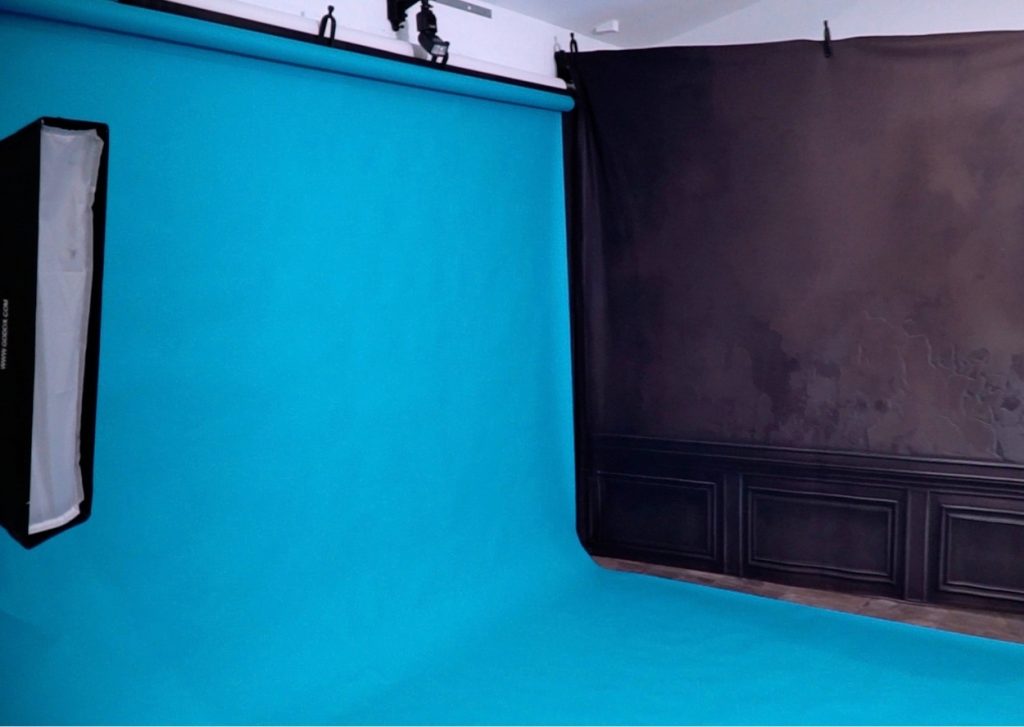
That’s exactly what we wanted to explore during a real photography session at G and E Studios. We photographed two children using multiple backdrop looks in one shooting space, with a focus on how the studio itself could support the session.
And whether you’re working in a spare bedroom, a garage studio, or a commercial space, the same planning principles can help you get more out of the room you already have.
Start With the Session, Not the Backdrops
It’s easy to fall in love with a new backdrop. We’ve all been there!
We see something beautiful, imagine the portraits we could create, and start figuring out where to put it.
But before bringing another backdrop or prop into your studio, think about the type of session you’re planning.
Ask yourself:
- How many different looks do we want to offer?
- Will we be photographing individuals, siblings, families, or groups?
- How much room do we need between the subject and the camera?
- Will our lighting need to change between looks?
- Where will clients wait while we transition between setups?
- How much time are we willing to spend changing the studio during a session?
These questions help us make decisions about the space before we’re standing in the middle of a session trying to figure out where everything goes.
For our session with two children, we wanted to demonstrate how different backdrops could create variety without requiring a completely different shooting area for every look.
The important part wasn’t simply having multiple backdrops available. It was thinking about how we would move between them.
More Backdrop Options Shouldn’t Mean More Work
Offering variety is wonderful for our clients. But behind the camera, that variety can create extra work if we haven’t planned ahead.
Think about what happens when you finish photographing a child on one backdrop and want to move to another.
Do you have to remove the first backdrop? Move a stand? Rearrange your lighting? Ask everyone to wait while you rebuild the next setup?
One change might not seem like a big deal. But repeat that process several times throughout a busy shooting day, and those interruptions add up.
One of the most useful things we can do is plan our backdrop transitions before the client arrives.
Think about the order of your looks
Not every backdrop needs to be used in the order it was installed.
Consider which looks share similar lighting, camera positions, or props. Grouping those looks together may reduce the number of adjustments needed during the session.
For example, if two backdrops work with the same lighting arrangement, photographing those looks consecutively could be easier than switching back and forth.
Make transitions part of the plan
Look at what must physically happen to move from one look to another.
Can you access the next backdrop without moving equipment? Can you change the shooting direction without blocking a walkway? Can you prepare a second look while keeping the first one available?
The goal isn’t necessarily to eliminate every adjustment. It’s to make those adjustments intentional rather than something we have to figure out with clients watching.

Your Floor Space Is Part of Your Workflow
When photographers think about studio space, we often focus on the dimensions of the room.
But there’s a difference between the size of a room and the amount of usable shooting space inside it.
A 12-foot-wide room doesn’t necessarily give us 12 feet of working room once we’ve added stands, modifiers, props, and furniture.
And those obstacles affect more than our ability to position a camera.
They influence how comfortably clients can move, where parents can stand, and how easily we can work with children during a session.
Look at your studio from the client’s perspective
Imagine walking into your studio for the first time.
Is there a clear place to enter and put belongings? Can clients move into the shooting area without stepping around equipment? Is there room for a parent to stay close to a younger child without blocking the photographer?
These details may seem small, but they’re part of the experience we’re creating.
Before your next session, walk through the room as though you’re the client. You might notice obstacles that you’ve become so accustomed to working around that you no longer see them.
The Professional Photographers of America shares a similar perspective in its article “Small Space, Big Business,” exploring how thoughtful space planning can support a professional photography business even when square footage is limited. You can read it here.
Plan Multiple Looks Without Building Multiple Sets
Here’s where a little creative thinking can make a big difference.
Having three different looks doesn’t necessarily mean you need three fully decorated sets occupying your studio at the same time.
Sometimes the difference between looks comes from the backdrop itself. Other times, it’s a change in lighting, camera angle, or a carefully selected prop.
Start by identifying the visual differences you want in the final gallery.
Maybe you’re planning:
- A clean, simple portrait look.
- A more textured or dramatic background.
- A coordinated corner setup that adds dimension.
Now consider what each look actually requires.
Does the second look need different lighting, or can you use the same arrangement? Can you change a backdrop without dismantling the first setup? Could a corner provide another composition without needing another complete shooting area?
When we think this way, we’re designing a photography experience rather than simply filling the room with equipment.

How Our Studio Setup Supports That Approach
At G and E Studios, we’re working with the same challenges many photographers face. Our photography business shares space with TogDrop Solutions, so we have to be intentional about how we use our available shooting area.
That experience is also part of what led us to develop TogDrop Solutions.
As manufacturers and photographers, we wanted a more adaptable way to use the space around us.
Our patented modular mounting system allows photographers to use suitable walls, upright tension poles, light stands, and ceilings as mounting locations for backdrops, lighting, and other studio gear.
Rather than treating every backdrop or lighting change as a separate setup, the system gives us the ability to build and adapt our mounting arrangement around the way we work.
But the important idea applies whether you’re using TogDrop or a traditional setup:
Your studio equipment should support your photography workflow, not dictate it.
That’s the thinking behind the TogDrop Backdrop System. It’s about creating mounting options that can change as the needs of a studio change.
The Client Experience Begins Before the First Photograph
We spend a lot of time thinking about the finished portraits. And we should!
But our clients experience much more than the images we deliver.
They experience how they’re welcomed into the studio, how we direct them, how smoothly the session moves, and how comfortable they feel throughout the process.
For families with young children, those details become especially important.
Children don’t always have the patience to wait while we move equipment or completely rearrange a set. Parents may already be managing outfits, expressions, and everyone’s energy level.
The more prepared we are, the more attention we can give to the people in front of our camera.
A thoughtful studio layout doesn’t guarantee a perfect session. We all know children have their own plans sometimes!
But it can remove some of the unnecessary interruptions that make our job harder.
And when we’re spending less time troubleshooting the setup, we have more opportunity to interact with our clients, watch for genuine expressions, and create the portraits they came to us for.
Five Things to Check Before Your Next Session
You don’t have to redesign your entire studio to improve how it functions.
Before your next photography session, take a few minutes to evaluate these five things:
- Your shooting distance. Make sure you have the room needed for the portraits you plan to create, including your preferred camera position and lens.
- Your backdrop transitions. Think through how you’ll move between looks and identify anything that must be removed or repositioned.
- Your lighting placement. Check whether stands, cords, or modifiers interfere with movement through the room.
- Your client space. Consider where parents, children, and personal belongings will be during the session.
- Your future flexibility. Ask whether your current arrangement can accommodate another type of session without requiring you to start over.
You may discover that a small change in how you arrange your equipment makes a noticeable difference in how you work.
And sometimes, you may realize that the issue isn’t the size of your studio at all. It’s how you’re using the space.

A Better Studio Isn’t Necessarily a Bigger Studio
We love seeing photographers create beautiful spaces. But we also know that moving into a larger studio isn’t always practical, affordable, or necessary.
Before deciding you need more square footage, take a closer look at how your current space functions.
Are you making the most of your available mounting locations? Are your backdrop changes taking longer than they need to? Is equipment occupying floor space that could be used for photographing clients?
Those are questions worth exploring.
Our session with two children was an opportunity to demonstrate what can happen when we approach a studio as a working environment rather than simply a room full of photography equipment.
Because ultimately, the goal isn’t to see how many backdrops we can hang.
It’s to create a space that allows us to photograph more comfortably, work more efficiently, and give our clients a better experience.
Let’s Talk About Your Studio
Every photographer works a little differently, and no two studio spaces are exactly alike.
If you’re trying to figure out how to get more usable space, offer multiple backdrop looks, or simplify your current setup, we’d love to help you think through the possibilities.
Schedule a complimentary TogTalk Consultation with Gary or Elaine.
We’ll talk about your studio, how you work, and what you’d like to make easier.